ALA Members Sent “Blast Email” Today

All ALA members with their communications preference set to receive email from ALA were sent a “Blast Email” from each of the candidates for ALA President today. I’m reproducing mine below as well. Please vote for me!


I write today to ask Lisa Janicke Hinchliffe for
 ALA Presidentfor your vote as a Candidate for ALA President.

I won’t take much of your time but let me address the question “Why Lisa?”

  • I have a proven track record of leadership though inclusive practices. I have led strategic planning processes in my own organization as well as in ACRL.  My success as Coordinator for Information Literacy Services and Instruction at the University of Illinois at Urbana-Champaign is a result of bringing together stakeholder groups within our distributed library system as well as on campus and across institutions.
  • I detail specific action items in my Candidate Statement so that ALA members can hold me accountable to my promise to support greater inclusion and member engagement in ALA.

Standing for election for the ALA Presidency is a great honor. I’ve relied on colleagues in ALA at every stage in my career – as an undergraduate student exploring career options, as a graduate student considering LIS specializations, as an information literacy specialist, as a school librarian, and as an LIS educator.  I want to give back to the community that has given me so much.

Thank you for the opportunity to share my candidacy with you. For more information, please visit my website (http://lisa4ala.org) and be in touch via email (lisalibrarian@gmail.com), Facebook (http://facebook.com/lisa4ala/) or Twitter (https://twitter.com/lisa4alaprez or https://twitter.com/lisalibrarian).

Thank you for your vote.

ALA Logo

Lisa on Circulating Ideas Podcast (Transcript)

I want to thank Steve Thomas, who produces the Circulating Ideas podcast, for his collaboration with me to create a transcript from the ALA president candidate interviews podcast in order to provide access for people with hearing disabilities. Steve is working to post a complete transcript of the podcast but in the interim has allowed me to post the transcript of my section. Lisa

Circulating Ideas, Episode 86
2016 ALA Presidential Candidates
Lisa Janicke Hinchliffe

Steve: Lisa, welcome to the show.

Lisa: Thank you.

Steve: Obviously, you are on the show because you are running for ALA President. Why do you want to be ALA President?

Lisa: Well, thank you for having me and really it’s a great honor to have been nominated to stand for election for the position at ALA President. When one accepts this kind of invitation you spend  a lot of time thinking about why do I want to do this and really am I the right person for the position at this point in time.

So, the first part of my answer is I believe that I’m the right person for what ALA needs in a president at this time, which is a president who is thinking about the future of the association and where the profession will be in say 20 years, which is, I think, as we can see all the trends obviously we’re moving to a more digital future, we’re moving to a more distributed future, and a future that really, absolutely needs to engage our newer and younger members so that the association has long-term vitality. So that’s the first part of my answer of why I want to be president.

Secondly, I believe I have the capacity to do this. I have a track record of helping associations, both my own organization through strategic planning as well as my time as president of the Association of College and Research Libraries, of helping an association move towards a future that is really vibrant and reflects an exciting vision for where things could be in the future, building on the successes of the past.

Finally, it’s a good time in my own career as I’ve had a lot of things that have wrapped up recently and it’s a good time to be able to devote really a very intensive three years to the kind of effort that this position requires and I’m very pleased to say that I have the support of my library and my library administration to devote this kind of effort to our profession.

Steve: I’ve done these kinds of interviews with the candidates the past few years and I’ve mentioned this kind of every time, that it’s obviously different from regular politics in that none of you, none of the candidates are saying that, you know, that ALA will be destroyed if the other candidates win or anything like that. But, you have your own strengths and you feel like your strengths are the ones that are going to help the association the most, so can you talk a little bit about how, what you personally will do to lead the profession because you talked a little bit about, some of the challenges that are coming up for libraries. Like what skills you bring to the table to, that would address those challenges.

Lisa: Sure, I mean I think one of the things that’s great about a professional association is that we’re all on the same side of the aisle as the phrase goes, so the “why me” is a great question. For the, the members to be considering as they cast their votes. So, the first thing I’ll say is that I’m really passionate and energetic about anything that I commit to. I’m sort of an energizer bunny when it comes to those things that I decide to take on and see through and I do see them through. But, I think the other thing that sets me apart, at least as I read the other candidates statements is that I’ve really put out to the voters very specific projects that they can expect me to champion. Those are in my candidate statement, obviously, at lisaforALA.org, but also in the statement that will come out in American Libraries.

So, I have very specifically said that here is how you can expect me to do my appointments process. I have committed that there will be at least one member of every committee that I appoint that has never before served on an ALA committee because I believe we need to create space for new people to join in our association work.

Secondly, I’ve said that I will champion and disseminate best practices in digital inclusion. I’m very concerned that we have a very conference focused approach to doing our business as an association. Midwinter and Annual are wonderful, but they are really a very expensive thing for many people and many people do not attend have funding in their workplace to be able to go to those, or they have personal life, or financial reasons that they can’t travel, or health reasons, or they’re a solo librarian and so the workplace doesn’t really let them leave twice a year for a week. So, I want all of those voices at the table so I think it’s time for us to really champion the way digital inclusion works for a professional association.

Thirdly, speaking specifically to that, I’ve said that I will bring a proposal to the executive board for a task force to really examine the future of our conference eco-system. Two conferences a year was a fabulous invention for the analog age, we need to ask ourselves if that’s still the right way to do our business and we also need to look at the impact and relationship of those conferences to our state chapters as well as our division conferences and ensure that we have the right conference eco-system going forward.

And then the final thing that I very specifically said is that I intend to re-engage the vision of ALA-APA which is the Allied Professional Association, which is our advocacy group for library workers. Just like libraries can’t live on love alone, neither can library employees and so we really need to look to the issues of what our salaries are, our benefits, the workplace environment, so that libraries are truly a workplace of choice for those who work in libraries and they are a place that really enables people to have the kinds of impact that we want them to be able to have because they’re being paid at the levels that are correct, that they have benefits, that they’re truly able to have a really healthy workplace and there’s a lot of advocacy work that we could be doing there. We have the capacity to do it in ALA-APA. There was a lot of vision when that was set up. I think it’s time to really capitalize and make that vision a reality.

Steve: You talked about the cost that it takes to attend a conference and that we often hear, especially when dues go up that people complain, complain, complain that the dues are going up. How do you justify that to staff, to members and how do you express what the greatest value is of, to ALA, to its members.

Lisa: Sure. So, I think that one of the things that we really need to think about is what do members need from ALA and what does ALA do best. I think ALA is best when it is a platform for participation and engagement. When together in ALA we do things that we cannot do by ourselves. I don’t really feel that the right mindset in some ways for the ALA President is to so to speak justify the dues increase so much as to show and to lead an association that is creating value for its members so the value is perceived and seen as commensurate with the cost. And, in fact, what I’d really like us to be is at a place where people will say “I get more value here than I even have to pay for.” That is the best kind of vision we want to have for the kinds of things because it should, it should matter that we can do things together, that we can’t do by ourselves.

Steve: Yeah exactly and that’s, that’s really what ALA is all about and I do like the, like what you’re talking about of the ALA-APA working together more cause that’s another thing that I hear about a lot too is why doesn’t ALA do more for individual librarians, like well that’s not really the mission of ALA, that’s the mission of ALA-APA, so.

Lisa: Well, and I think the other thing that is interesting is many people do not even realize that ALA-APA exists, or what it’s mission is. In part because it doesn’t have individual membership, it’s set up as a different kind of association and in fact during my time as standing for election, when I have said “Oh, you’re also elected… if I’m elected I’ll also be elected ALA-APA President,” people have said “What’s that?” and so I’m really hopeful that my even making this a priority has already raised people’s awareness, but people’s awareness of ALA-APA will be ultimately raised by the value it creates for the profession and for library workers. And I want to be very clear here that when I talk about library, I keep using the phrase library workers because it’s the most inclusive term I can come up with to mean all of us who work in libraries.

I’m also very concerned about staff salaries; there’s issues across the board with both salary levels as well as job insecurity as we see the way schools or public libraries or academic libraries or everyone is really struggling in this economy, that we need to make sure that people have the kind of, that they’re not in a precarious situation and that goes for all of our library workers, librarians, library staff, student workers if we’re in an academic situation, like I am working in an academic library, the graduate students who work for us. I’m really concerned across the board about all of our employees and workers.

Steve: So we’ve talked a little bit about ALA-APA and let’s take another step back and just assume maybe there are some listeners out there that don’t know what it is, can you tell listeners what it is?

Lisa: Sure, absolutely. So, ALA-APA is the American Library Association-Allied Professional Association, which is essentially a second association that was established that can do the kind of advocacy for library workers that ALA, given its tax status, is not able to. So, we don’t need to go into the details of IRS regulations, but just know that there are certain kinds of things that certain kinds of associations are allowed to do under their tax status and then other associations, other kinds of things. So, ALA-APA is the kind of association that can do worker advocacy and so it was set up as a result of, or stemming from the work of Mitch Freedman when he was ALA President and really took on the issue of library workers as his, one of his primary emphases and so from that we have this additional association. The ALA President is president of ALA-APA. ALA Council is also the ALA-APA Council, so the governance structure of the two is paired, though careful effort is made to be very clear when they are acting each of those.

Steve: Okay, so ALA has all these great things but sometimes it can be like so many great things, that it seems really overwhelming when somebody joins, that they don’t really know where to get started. How do you think new members can help orient themselves and get more involved, if they want to get more involved in the organization, cause I know, especially when I went over to my first ALA conference, you know you just walk in and there’s just 20,000 people in this room and it’s like oh my gosh, I don’t even know what to, or even where to get started.

Lisa: Absolutely. First I want to give a real shout out here to the New Members Round Table which really takes this as one of their primary missions, to engage with and help new members find their place in the association, but I don’t think we can leave it to the New Members Round Table to take responsibility for this, it’s really all of our responsibility to bring in our new members, to create pathways of participation and engagement. I think also new members, people who are new to the association, and I should be clear, sometimes new members are new to being members and sometimes they’re new to coming to conference, or new to volunteering, or engaging in a different way, we’re all new time and time again.

So, I think that looking for those opportunities for orientations and the like is, of course, helpful, but I tend to think, especially as I’m thinking of myself as ALA President, to thinking about more what structures and systems do we need to set up to ensure that people are welcomed into the association and then are able to navigate to the place where they feel they can best meet their goals for engaging and do the kind of work that they’re hoping to do. For the past few years I’ve actually be on the board of my local food co-op and that has really helped me think about this in a new way because members of a food co-op also have different levels of engagement and engage on different aspects over the course of their membership and so bringing forward that notion that helping people find their place at the right time for them in the right work that they want to do is really a key component if ALA is going to be a platform for member engagement and, and act and collective action.

So, I think this involves working really closely as well with the membership office of the association. We have some great staff there who are thinking very carefully about these issues as well and so it’s really a partnership between the ALA staff and then ALA leaders as well as, I’m going to, do also one other thing here which is mention that I think peer mentoring or peer sharing within ALA is a unrecognized asset that we have, which is its probably often not going to be the president of X, Y or Z division who really makes that connection with a new members.

It’s probably a member who’s doing the kind of work that person’s interested in, who’s maybe 1, 2, 3, 4, 5 years into that role and so we really need to also think about empowering our sort of frontline people who are newer, but not brand new, to also have that role in bringing people in. So, that kind of peer mentoring idea is really key and I think we have a, we have an opportunity to think about this more robustly if we bring in that peer relationship and not just always a “Who’s the top leaders?” kind of perspective on this.

Steve: Right. So, as we, as we all are keenly aware of, the profession is over and I think it’s sort of going in the wrong direction, that we’re, the profession is overwhelmingly white, overwhelmingly straight, and to a lesser extent overwhelmingly female. What can we do as a profession to not only help libraries beef up their staffing with being more diverse, but also getting into MLS schools. Cause I know that, I mean the professional staff or people with the masters degrees, are even smaller I think percentage wise, of that kind of thing, so what can ALA do and what can we do kind of as a profession to kind of increase the diversity?

Lisa: Sure. So the first thing I think is really key is even embedded in your question which is we must acknowledge that we have a problem. This has not been a success story in spite of our best efforts to date. So, people have done many things, Spectrum scholars, mentorship programs, recruitment programs. It has not had the effect that we intended it to have and we need to think seriously about why is that. You mentioned recruitment into MLS programs. Obviously cost of going to school is one of the greatest issues that is going to be faced but it is not just the cost of going to school. It is also whether people find an environment in those programs that fosters their growth and development and welcomes them into the profession.

So, even when people get an MLS, do they choose libraries as their workplace of choice? If they choose libraries as their workplace of choice, what environment do they find within those libraries? Do they find an environment that is supportive of their growth and development? And that is also supportive of the centrality of diversity to mission, or not.

So, I am equally concerned with recruitment of the profession as well as retention and I think we have some, some work to do in both of these areas. You also mentioned the dynamic that I think we need to really ask ourselves how this has happened and how we want to change it, which is while the profession in many cases is not as diverse as we would like in the sense profession here meaning those people who have an MLS were employed in the categories in our situations that we recognize structurally as librarians. Many times the staff is much more diverse and so we need to ask ourselves some questions about the pathways from staff positions to professional positions and whether we have structured a system that disincentives a staff-to-librarian pathway.

I don’t have the answers here, I have a lot of questions and I think that we have a lot of work to do, that is going to mean much more inclusive conversations than we’ve had to date and I’m happy to see that I feel those conversations are happening. Jennifer Vinopal just wrote a great essay in “In The Library With The Lead Pipe” that really called out a number of these challenges. But, also issued a very clear call to engagement around these issues.

So, I would welcome the opportunity as ALA President to support and foster those conversations. There is not an easy solution here I don’t think, but it is crucial and vital that we take action and figuring out the right action to take when so many fields have tried things that have not worked is really going to mean some very honest reflection and some very deep engagement with some very big structural problems within our society as well as within our profession.

Steve: Right, and sort of related, related to that diversity issue, not something that we didn’t, I didn’t mention, I didn’t call out specially, but how can ALA be more accessible to members with disabilities?

Lisa: Sure. I think that’s another key question that comes down to this word that I’ve sort of been reflecting on throughout my presidential run, if you will, which is the word is “inclusion.” So, there’s inclusion around diversity, there’s inclusion around people with disabilities. Some of the things that I mentioned around digital inclusion will certainly help people with disabilities engage in the associations work. Not having to travel in order to be fully engaged through digital inclusion mechanisms and the like. However, we have to realize that every technology that we use always has a way in which it excludes because a particular technology that is, say audio only, such as this podcast, we need to be able to do the transcription in order to make it accessible with hearing disabilities for example. So, we need to be attentive to these issues.

There are people within ALA, ASCLA in particular that are very good at thinking about these issues and attending to these issues. So this is another case where I want to sort of say that we have expertise in one area of ALA, that if we could bring that to bear across the entire association would really benefit us all. So, you know, ALA can be as siloed as any organization, and so any time that the ALA president, by having this remit across the entire association can sort of highlight and bring forward the expertise of one group for the benefit of the entire association, I think that’s one of the roles of the President, which is really that sort of, in my mind it’s, it’s an appreciative inquiry sort of approach to “Where do we have strength? How can we bring that strength to bear?”

So, technology is one area that people with disabilities, there’s also things that I’m happy to see being done around our conferences and ensuring that our physical facilities where we hold our conferences are accessible. There’s more that we could do with that as well and again I’m happy to see some member groups stepping up and saying here’s how we can improve this and make it better.

Steve: And in your job at University of Illinois, how do, how do you work with your staff and with your students you work with and how do you, how do you sort of encourage them to succeed and how would you use those skills to improve the ALA if you were elected president?

Lisa: Sure. So, I’ll use two examples here. One thing, I think it’s important to sort of say is that I work at the University of Illinois at Urbana-Champaign, a very large library, multiple libraries on campus, hundreds of employees. My own office is myself, one other person, an e-learning specialist, and a third of a time graduate assistant so I actually have relatively few people who work directly for me under my supervision. However, I am responsible for the information literacy program, which is across all of our library units, and so what I’ve really developed over my career has been the ability to work through, to help an association or an organization to work through strategies of collaboration in order to achieve collective action even without supervisory power and I’ve done that with my information literacy leadership here at the university, but also at the, for the last year in 2015, the dean of our library asked me to coordinate our strategic planning process and the only person who was required to participate in that strategic planning process was me, in the sense that I had been tasked to oversee it. Everyone else was engaged really by my invitation, to asking them to serve on groups, to come to discussion forums, to attend a retreat. And I’m really pleased to say that more than 250 people in our association chose to engage because they saw opportunities and space to have an impact.

Same approach I took with ACRL. Again, as a division president, no one has to do things. You invite them to, you respond when they indicate they’re willing to volunteer, so that’s actually my skill set which is working across associations that are very complex, where people want to engage, and helping navigate, helping them navigate, but also creating structures that means that people aren’t just doing activities, but those activities lead to accomplishments that, again, people couldn’t get to if they were working on their own.

This is maybe another venue for me to mention one other thing that I’m really pleased that I get to do in my job which is we have a library school here at the University of Illinois at Urbana-Champaign and in my career I’ve had the opportunity to engage with hundreds and hundreds of library school students in any number of venues and different approaches. So, there I’ve really been in more of a mentoring role and helping people find their paths. So, it’s really been an important component of my own career to be helping those library school students who become our new professionals find their own place within the profession and in many cases within ALA.

Steve: So, I want to finish up with, this might be a two or three part question, so we’ll see how this goes. I want to know number one, when you were younger, what did you like about libraries? Number two, sort of why did you become a librarian and is that, is that tied to your earlier members of a, memories of being a, of being in libraries and being part of that? And why are libraries still important in the 21st century? So, those are sort of combined together.

Lisa: Okay, yes. Let’s, let’s go for multi-part question here. First of all my, my earliest memories of libraries are indeed the public library where my mother took us very regularly and we were allowed to get “five books, just five books.” Now, you have to know that I have five siblings, so across five of us, or across all six of us that’s 30 books every time, so I understand why my Mom put that limit on. So, we went very regularly and it was definitely a place that my parents could find a way to, to meet the demands of their children who were voracious readers. I read so much as a child I think that’s like a stereotype, right, of librarians but it is indeed true that I loved to read as a child. Likewise, in, in elementary and, and secondary schools same sorts of things. I think in my, my middle school I had read through almost the entire collection of fiction, so it’s, it’s a long time for me in my childhood of being a place that, you know, gave me access to books. I guess is the way you would say. This, in many ways, is, there’s kind of a break if you will in my life.

At, at high school I was a debater and so we did policy debate and I spent a lot of time doing research in libraries, so less focused if you will on libraries as a place of leisure reading, and more as a place of research which, when I got to college I had never whatever reason actually considered librarianship as a career, but I worked in the library as a student worker and the librarians there kept encouraging me to consider librarianship as a career and I thought I was going to be a lawyer and after a year of working in a law firm, I discovered I wasn’t really wanting to be a lawyer after all and so started to explore librarianship and that’s really been the story since then.

So, it’s my story is a story of the, you know, the voracious leisure reader through the high school researcher and then library employee in college, so it’s probably a thread of how I became a librarian.

So, why are libraries important today? You know, I think libraries are important for many of the reasons that they were important to me as a child and as a, as a student. But I also think they’re important in a lot of other ways and one of the things that I really kind of like to keep in mind always is that my experience is not everyone’s experience. So, for some the library is important because of place, it creates, it’s a space and it has programming and it has caring adults. For other people it’s the collections, myself I think it was more of a collections focused sort of experience of the library. For others, it’s the, it’s because it, it is a self-reflection, it creates an, it’s sort of a collections but it’s because the collections create a world that they don’t have access to, for either, for any number of reasons. I mean I think we hear a lot about teens who are able to sort of explore who they are and their identity through materials that are in the library. So, I think there is the aspect of access to collections, access to space, access to staff and, and caring adults, all of those things that are so key.

So it’s sometimes hard to come up with a single reason why libraries are important, so I’m going to put forward the single reason libraries are important is because of all the reasons that libraries are important. It’s the multiplicity of roles that they serve within all of our different kinds of communities that is really what’s most important about them and that they are not narrow in their focus, but rather that they adapt and become the information organization that their communities need them to be in relation to the needs and priorities of that community at that point in time. Really libraries are the story of incredibly adaptable institutions and they are lead by very innovative and adaptable leaders and they have employees who are very attuned to the needs of the community. So, that is really maybe, maybe I’ve come to my single reason and the single reason libraries are important is because they serve the needs of their communities.

Steve: And we contain multitudes.

Lisa: Absolutely.

Steve: All right, well I hope everybody has learned a lot about your campaign and what you want to bring to ALA and most importantly I hope everybody goes out and votes.

Lisa: Absolutely, could not agree more with that last comment which is one key component of member engagement is, is having your voice be part of our democratic process. So, Steve, I thank you very much for the opportunity to be part of your show and the opportunity to share my thoughts with all of your listeners.

ACRL Asked and I Answered

As a past president of the Association of College and Research Libraries (2010-2011), it was a particular pleasure to respond to the questions that the ACRL Board asked of the candidates for ALA President. The answers were published in the March 2016 issue of C&RL NewsIn print, the responses are grouped by question. I have provided a copy of my answers below for anyone who would like to see them as a complete set.

______________________

Lisa Janicke Hinchliffe
Candidate for ALA President

Introductory Statement:

I want to thank the ACRL Board for these questions and the opportunity to share my thoughts with ACRL members. As an academic librarian, ACRL has been my division home. As a past ACRL President (2010-2011), I know well the achievements of ACRL members and staff. As a donor to ACRL Friends, I am confident that my funds are put to good use. For more information about my candidacy for ALA President, please visit http://lisa4ala.org and also be in touch via email (lisalibrarian@gmail.com), Facebook (http://facebook.com/lisa4ala/) or Twitter (@lisa4alaprez or @lisalibrarian).

  1. What do you see as the most important issues facing our profession, particularly for academic and research librarians? With respect to these issues, what should ALA do to address them? What skills do you bring to ALA to help address these issues and move the association forward?

The most important issue for our profession today is understanding the information needs of our communities and continuing our historic success in transforming our libraries to meet those needs. ALA is a platform for collective action and empowerment of libraries and library workers through which we can collaborate and implement solutions that cannot be achieved by a single institution or individual. ACRL exemplifies this for the academic library community.

I have a long track record of providing leadership in decentralized organizations that are managing multiple priorities. When I served as ACRL President (2010-2011), I brought together hundreds of people (members and staff) with divergent viewpoints to create the ACRL’s Plan for Excellence. We also launched the Value of Academic Libraries Initiative, shifted College and Research Libraries to an open access model, and re-structured the division committees, among other things.

My work as the information literacy coordinator at the University of Illinois at Urbana depends on successfully deploying strategies of persuasion and partnership for programmatic development. In 2015, I also served as coordinator for strategic planning at the University Library, engaging people across the organization in a highly participatory and inclusive process to draft the library’s recently adopted Framework for Strategic Action.

  1. ACRL’s Plan for Excellence identifies goals that heighten the impact that librarians have upon the Value of Academic Libraries, Student Learning, and the Research and Scholarly Environment. In what ways would you, as ALA president, work with ACRL and its partners to advance or promote these goals?

As ALA President, I would welcome the opportunity to highlight the work of ACRL and academic and research libraries in broader conversations about the impact that libraries have on their communities. I have continued to lead a component of the ACRL Value of Academic Libraries Initiative – specifically serving as co-lead facilitator of the Assessment in Action project – and am familiar with how the ACRL Plan for Excellence serves as the foundation of ACRL’s programmatic development as well as a springboard for engagement with the broader higher education community in building visibility for the impact of academic libraries on their communities.

Many other divisions and units within ALA are also undertaking projects under the rubrics of impact and value. I do not wish to homogenize these efforts because each group has unique considerations and circumstances; however, as ALA President, I would be in a position to harmonize the results into clear, coherent, and compelling messages about the value of all types of libraries to policymakers, funding agencies, and other stakeholders. I know that academic libraries sometimes are missing from some of the national discussions on the importance of libraries, and ACRL can count on me to be inclusion of academic libraries in these conversations.

  1. How do you define diversity, and what experience have you had advancing diversity in the library profession?

The definition of diversity in ACRL’s Diversity Standards: Cultural Competency for Academic Libraries reflects my own understanding of diversity and its importance in our libraries and society. My own work in advancing diversity has focused on mentorship. I have served as a mentor in the ACRL Dr. E. J. Josey Spectrum Scholar Mentor Program – one mentee relationship is getting near to a decade long now – as well as in local programs at the University of Illinois. As Head of the Undergraduate Library, I championed a successful program to recruit undergraduate student workers from diverse backgrounds into graduate school and the library profession.

Recruiting to the profession is, however, only one aspect of creating inclusivity and equity. More recently I have added to my efforts a focus on retention in the profession and what it means for libraries to be a workplace of choice. If we are to move towards attaining our diversity goals, we need to understand all of the factors and considerations that are impacting diversity in the profession.

  1. Membership organizations, such as ALA and ACRL, need to demonstrate their value to recruit and retain members. What does ALA need to do to keep the organization relevant to academic and research librarians, particularly those new to the profession? How can ALA continue to engage members and non-members as travel and professional development funds are being reduced or eliminated?

Delivering value is a challenge for both libraries and library associations. Just as academic libraries need to understand the needs of their communities and meet them so too do ALA and ACRL. I am excited about new efforts in this arena that are underway in both ALA and ACRL.

Two of the specific actions that I have promised in my Candidate Statement (https://lisahinchliffe.com/ethos-of-hospitality/) are particularly relevant to the question of engagement. First, I commit to using ALA President funds to support promising examples of digital inclusion and to share those practices across the association. ALA policy allows us to conduct our work virtually, and ACRL has been a leader in experimenting with possibilities. We need to share practices across the association and align resources with those practices.

Second, I believe that ALA needs to systematically re-examine the viability of holding two conferences per year and the effect of doing so on member engagement and the ecosystem of division and state conferences. Given the strength of the ACRL Conference, I look forward to engaging ACRL leaders in these discussions.

  1. Managing research data (acquiring, storing, organizing and analyzing it) is a subject of great interest both in and beyond higher education. ACRL is currently exploring how it might provide educational opportunities related to research data management to its members. As data management becomes more widely used in analytical methods in academic and scholarly research, as well as government and industry, how can ALA support divisional efforts to make sure we are helping our members to thrive in this new research environment?

Research data services is a great example of how academic libraries recognize information needs in their communities and transform library organizations to serve these needs. Managing research data is a very complex and fast-changing area of work and requires partnerships within our institutions as well as across industry and government.

As ACRL leaders know, ACRL is not the only division whose members are engaged in this work. This is a good example of a case where ALA needs to be a platform for divisions and other units working together. At times, unfortunately, ALA structures and policies can create barriers to partnerships. If elected ALA President, I anticipate taking an active role in helping the association develop creative solutions to working collaboratively on issues and challenges that cross organizational lines. By doing so we can create value for our members and better meet their needs through professional development and program support.

  1. There has been much written about net neutrality and the dangers that changing existing policies might mean for websites, organizations and other information agencies and content providers. In what ways will the end of net neutrality affect college and research libraries, and what steps might we take to protect our interests?

The end of net neutrality will mean first and foremost even greater disparity in information access for our communities. A very challenging aspect of this is that such inequality and injustice can be obscured by complex business arrangements, contracts and licenses, and even competing interests within our own higher education institutions.

We will have an opportunity to play an important role locally within our institutions. Our scholarly communications and information literacy librarians will be key players in educating and working with our user communities about the impacts of the end of net neutrality on teaching, learning, and research. Engaging our user communities will be necessary to build coalitions for advocacy and communication.

Fundamentally, we must focus our interests in alignment with the interests of our user communities. We must be active and vigilant in monitoring legislative changes, understanding and documenting their impacts, and choosing strategically how we approach our advocacy work. I am a comfortable and confident public speaker and as ALA President I would use those talents in partnership with staff and member leaders to address challenges to net neutrality.


Why I Support the ALA-Allied Professional Association

As a passionate and energetic advocate for all library workers, I made the following commitment to the ALA-Allied Professional Association in my Candidate Statement:

I will re-engage the vision of previous ALA President Mitch Freedman
for the ALA Allied Professional Association (ALA-APA). Library workers
need a strong organization to advocate for improved wages, benefits, etc.
As ALA-APA President, I will be a strong voice for library workers and
seek to grow the influence of ALA-APA.

Since then, I have had a number of people ask me about ALA-APA and how it relates to ALA. ALA-APA  is a separate and independent organization from ALA and exists “to promote the mutual professional interests of librarians and other library workers.”

The ALA President is also ALA-APA President and ALA-APA is governed by the ALA-APA Council, which is made up of the members of the concurrent ALA Council. Full details of the ALA-APA governance structure is available online. ALA-APA a number of committees working actively in support of its mission and I hope to see even more member engagement with these committees over the coming years.

I am very pleased that we have ALA-APA as a platform and mechanism for advocating and supporting library workers. As I have found myself saying time and time again, libraries cannot live on love alone and neither can library workers. Library workers deserve good wages and benefits, excellent working conditions, and provision of ongoing training and development.

Yet, I find myself very concerned about the job market and employment conditions for library workers. Library staff positions are often underpaid, especially relative to other jobs with analogous technical skill requirements. Many staff find themselves in positions without promotion opportunities.

Likewise, graduating MLS students face a job market that is unpredictable and fickle – a job market that may lead to a well-paying position with good benefits in a healthy organization with room for growth and support for professional development. Or, it may not. For too many LIS graduates, while libraries are their workplaces of choice, jobs are scarce because library staffing levels are contracting, or libraries are not a realistic option because wages and benefits are not adequate in light of the levels of student debt they carry from undergraduate and/or graduate education.

Mid-career and late-career librarians also face challenges of low salaries and salary compression due to years of no or minimal raises due to economically challenging times. Retired library workers may find their pensions inadequate. Library administrators find themselves managing staffing reduction processes that are externally imposed rather than training and development programs.

I see library workers of all types taking classes, training in new skills, and pursuing other opportunities to build their abilities with a strategic eye to way that their jobs are evolving, especially in light of changing technology.  I’m pleased to see that LIS programs have been increasing their staffing for career preparation and job placement over the past few years. However, neither individual students nor individual library workers nor individual libraries can fully address the systemic problems in our job market and workplace conditions. More systematic action is needed.

I believe that ALA-APA is our vehicle for collectively addressing these problems and securing change. This is why I have committed to  re-engage the vision of previous ALA President Mitch Freedman for the ALA-APA. We must create a better future for library workers. Library workers deserve our support.

ACRL President (2010-2011)

I had the honor of serving as President of the Association of College and Research Libraries (ACRL) in 2010-2011. As a division president, I worked closely with Mary Ellen Davis (ACRL Executive Director), the ACRL Board of Directors, Roberta Stevens (who was ALA President that year), all of the other division presidents, and many other ALA and ACRL staff.  That experience was very formative of how I think about the role of the ALA President and the priorities that I highlight in my Candidate Statement.

4751745349_eb9625694e
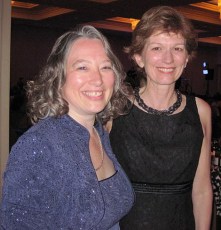
Lisa (ACRL President) and Mary Ellen Davis (ACRL Executive Director) at the ALA Inauguration in  2010

It was a very busy and productive year. There is a detailed annual report online but I thought I might also share some of the highlights:

We could accomplish so much because of the generosity of ACRL members in contributing their time and effort to our collective work. It was an honor to lead the association as President and to support the community in achieving so much, which included ensuring that groups had the resources that they needed and doing everything possible to remove barriers and obstacles when they appeared.


ALCTS Asked and I Answered

The Association for Library Collections and Technical Services (ALCTS) asked the candidates for ALA President a series of questions. My answers are below and also posted at: http://www.ala.org/alctsnews/features/elections-2016-ala-pres-questions. I welcome feedback and ongoing conversation with my ideas and your perspectives!

Lisa Janicke Hinchliffe

Why did you decide to run for ALA president? If you are elected, what will be your primary focus? What do you hope to accomplish during your term?

I am very proud of ALA and the work that we do together as colleagues. We have a strong Code of Ethics that guides our practice and we are an influential force in policy-making. We engage important conversations around privacy and intellectual freedom. We are leaders in using technology and standards to organize and advance access to information. By joining together as a community of colleagues, we accomplish more than we can alone.

I also believe, however, that there is a need to improve our association. ALA is the oldest and largest library association in the world and we need it to be the most engaged library association in the world as well. Unfortunately, we have many talented members and non-members who are not yet engaged in our collective work.

Because I believe that ALA must be a platform for participation and empowerment for all members, my focus will be on creating an ethos of hospitality that welcomes all members and removes barriers to participation and collaboration across the association. We must create and support practices of inclusion. We must intentionally create space for diversity to strengthen ALA as an inclusive and collegial community of practice.

To begin, here are four specific actions to build the ethos of hospitality that you can expect from me:

  1. I will charge my appointments committee to appoint at least one person who has not previously served on an ALA committee to each committee. I took this approach as ACRL President and welcomed many newer members of the profession into leadership positions and increased the diversity of committee membership.
  2. I commit to using ALA President funds to support promising examples of digital inclusion and to share those practices across the association. ALA policy allows us to conduct our work virtually; however, we often still rely on in-person meetings. This excludes members who are unable to travel for financial, health, work, etc. reasons. We can do better.
  3. I will re-engage the vision for the ALA Allied Professional Association (ALA-APA). The ALA President is also the ALA-APA President. Library workers need a strong organization to advocate for wages, benefits, etc.
  4. I will lead ALA in systematically re-examining the viability of holding two conferences/year and the effect of doing so on member engagement and the ecosystem of division and state conferences.

As ALA President, I will be a passionate voice for libraries and library workers, for dismantling exclusion, and for pursuing an ethos of hospitality and inclusion. We are a strong community of practice that can be made stronger. This is why I decided to run for ALA President.

Please discuss how your ALA goals and philosophy relate to ALCTS. How might ALCTS help facilitate achievement of those goals?

I hope that ALCTS and all other ALA groups join me in working to create a culture of inclusion and accessibility across our association. Adopting the practice of making space on committees for those who have never served before (which is similar to but an expansion of the philosophy of the intern positions that already exist in ALCTS) and experimenting with digital engagement are just two ways that we can pursue inclusion. I look forward to the creativity that I know will come from engaging this across ALA.

The videos that ALCTS has posted on YouTube, e.g. ALCTS 101, are great and I noticed the ALCTS New Member Interest Group as well. These are the kinds of activities that I would like to highlight and share across ALA so that successful practices within one division are disseminated and can be adopted/adapted by other groups within ALA. I hope that ALCTS will pursue the funding that I plan to make available and be a partner in my digital inclusion initiatives.

With these specific examples of the ways that ALCTS is carrying out the goals in its Strategic Plan 2015, ALCTS is well-poised to be a partner in achieving my ALA President goals and my President goals are well-aligned with ALCTS priorities!

What do you see as the greatest challenges facing individuals engaged in the areas of work represented by ALCTS (acquisitions, cataloging, serials, preservation, and collection development) in the near future? How can ALA assist ALCTS members to meet those challenges?

The greatest challenges facing individuals engaged in the areas of work represented by ALCTS (acquisitions, cataloging, serials, preservation, and collection development) relate to the fact that when this work is done well it disappears into the background and is taken for granted. The skills, training, management, and expertise that are required are not as well understood or appreciated as they deserve to be. In addition, these areas are often considered for outsourcing in times of budget cuts. The challenge is how to advocate so that these areas have sufficient resources and ongoing investment in order to continue to do excellent work and to ensure that any outsourcing is pursued strategically and with attention to quality assurance, which still needs to be monitored internally.

(As a side note, I find this is something I have in common with you. As the Coordinator for Information Literacy, I’m a midlevel administrator and much of my effort is focused on ensuring that our library has reliable and robust instructional infrastructures: the tools, resources, communications, workflows, campus collaborations, information sharing mechanisms, etc. that my colleagues need in order to create information literacy programs for their user communities. When they are in place and working well, they are relatively invisible.)

I see the role of the ALA President as bringing visibility to all aspects of library work. I believe strongly in the importance of the areas represented by ALCTS. I have been on my library’s discovery system team for more years than I can count, serving as co-chair for a few, and also was on the steering committee of our consortium the last time that we selected a new integrated library system. Recently, I served on a NISO working group related to privacy in library third-party databases and systems and have been recently been appointed to another on privacy in research data. Nevertheless, the bulk of my expertise is primarily in information literacy and so I would look to partner with ALCTS leaders on how to best articulate the value and impact of your work.

How can ALA ensure that certain members, whose primary affiliation is to a “type of activity” division, feel connected to the concerns of the organization as a whole? How might their involvement be increased? How might ALA’s awareness of their concerns be increased?

As ALA President, I will meet regularly with the Division Presidents and other leaders who are elected this spring. We will meet over the coming three years and I believe that those meetings have the potential for working collaboratively across the association on topics of mutual interest and concern.

I see it as part of the role of the ALA President to signal and suggest where partnerships would be possible and fruitful. It is also the role of the ALA President to lead efforts to remove obstacles to collaboration. For example, the ACRL Board asked the ALA presidential candidates a question about supporting member efforts with “managing research data (acquiring, storing, organizing and analyzing it).” In my response I said:

As ACRL leaders know, ACRL is not the only division whose members are engaged in this work. This is a good example of a case where ALA needs to be a platform for divisions and other units working together. At times, unfortunately, ALA structures and policies can create barriers to partnerships. If elected ALA President, I anticipate taking an active role in helping the association develop creative solutions to working collaboratively on issues and challenges that cross organizational lines. By doing so we can create value for our members and better meet their needs through professional development and program support. (C&RL News, March 2016, p. 147+)

ALCTS is clearly one of the divisions that is also working in the area of research data services, as an example. Bringing together the skills and perspectives from both “type of library “and “type of activity” groups in ALA can only strengthen our ability to engage and lead on these critical issues in libraries.

In recent years it has been difficult for ALCTS members to “see themselves” or to see that the association embraces issues that are critical to ALCTS. What steps will you take to increase ALA’s inclusiveness within its own ranks?

My answer here cannot help but reference my candidate statement and the “ethos of hospitality” that I am championing. Our mission is too important to sideline any members of our ALA community.

This is a very challenging issue and, whether this exclusion is structural, financial, policy-based, administrative, etc. (or all of these things!), is not clear to me. Again, I see meetings with the Division Presidents and other leaders who are elected this spring as a productive forum for engagement on the topic of exclusion/inclusion.

One thing, however, that I have come to realize is that many people who are active in ALA, but active primarily within the divisions, do not know the policies and procedures for getting ALA Council attention to their issues. Given the complexity of ALA governance structure, those policies and procedures are also complex. I have been pleased to see that ALA Council has been offering more training for ALA Council members recently as well as seeking to improve the Membership Meetings. I would like to see training sessions and support for people who are not on ALA Council about the mechanisms for engaging with ALA Council and bringing forward resolutions and action items.

Finally, as ALA President, I can promise you that I will listen to your concerns because listening is a key component of inclusion. I will ask questions. I will converse. I know that I cannot rely on my own experience as my only guide and I hope you will join me in this conversation.

Thank you for the opportunity to respond to these questions and engage with ALCTS members. For more information about my candidacy for ALA President, please visit my website (http://lisa4ala.org) and also be in touch via email (lisalibrarian@gmail.com), Facebook (http://facebook.com/lisa4ala/) or Twitter (https://twitter.com/lisa4alaprez or https://twitter.com/lisalibrarian).

Finally, for more information about all of the candidates: ALA hosted a Presidential and Treasurer Candidates’ Forum during the ALA Midwinter meeting and a recording is available online (https://www.youtube.com/watch?v=ktLPu6fb2M8) and Circulating Ideas also interviewed the presidential candidates in a podcast (https://circulatingideas.com/2016/02/16/episode-86-ala-presidential-candidates-2016/).

The Joy of Working with LIS Students

I spent some time over the weekend finalizing my responses to the questions that Hack Library School sent to the ALA President candidates and so I’ve been thinking about LIS students and LIS education. It is one of the absolute joys in my professional career to work with LIS students, particularly those here at the University of Illinois at Urbana-Champaign (UIUC) in the Graduate School of Library and Information Science (GSLIS), but also the students in other programs who I have been fortunate to get to know through social media, involvement in professional associations, accreditation visits, etc.

I’ll warn now that this blog post is going to get long because I love this part of my work so much and I have gotten to work with so many great students that I want to tell about as many of them as possible!

10860199_697606970361518_1176350743_n
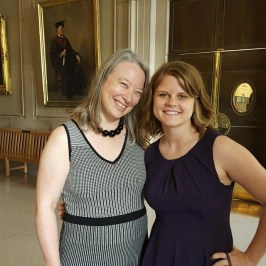
With Sarah Crissinger (GSLIS Convocation 2015)

I started teaching in GSLIS-UIUC shortly after I graduated and was recently appointed as  affiliate faculty in the school. Over the years I have taught a variety of courses:

  • LIS450AC: Library Use Instruction,
  • LIS458 (formerly LIS316): Instruction and Assistance Systems,
  • LIS590HEL: Information Professionals in Higher Education (now LIS567 Academic Librarianship), and
  • for the first time this summer, LIS590IIP: International Information Associations and Policy.

The later two courses I co-created with Melissa Wong and Clara Chu, respectively, when we saw student interest and each time we received enthusiastic support from GSLIS. I enjoy teaching both in-person and online and appreciate the benefits that each mode offers to students and instructors. (More than once I have set my alarm for the middle of the night to get up and teach when traveling overseas!)

As a reflective teacher, I have also been an active participant in ALISE conferences and WISE workshops. I served for more than a decade as the co-coordinator of the GSLIS/Library Teaching Alliance, a professional development academy funded by the Office of the Provost, which culminated in a year-long focus on Cultural Competency in LIS Education in 2014.

I am fortunate to be able to hire one graduate assistant each year through the Office of Information Literacy of the University Library and also had funding for a CLIR Postdoctoral Fellow for a year. I also hire a number of additional students on an hourly basis each year to work on projects, which are varied work and have included user studies/library assessmentcatalog/discovery system analysisstrategic planning process support, and establishing a publication series (project in progress). I have also supervised practicum field experiences, internships, and independent studies, with the particular format chosen to best meet the needs to each individual student, and served as a mentor in the Dr. E. J. Josey Spectrum Scholar Mentor Program.

I’m so proud of the work that each and every one of these students has done and am
particularly pleased that they are able to leverage their experiences in their job search and eventual career.

In addition to the pre-professional librarianship experience that students gain by working in the Office of Information Literacy, I also encourage them to join me in presenting at conferences and publishing about our work. Here are a few of the citations from over the years:

10672326_10203228233523719_7036291199967318619_n
With Lauren Kosrow (Charleston Conference 2014)

We have a very active ALA Student Chapter at GSLIS and, in partnership with them, I give advice to students on attending conferences and getting involved in the professional associations. My favorite presentation is Did You Know “Conferencing” is a Verb? Strategies for Surviving and Thriving at Library Conferences – it is so much fun to give away the “conference survival-pack” at the end to a lucky winner! When it is time for the job search, I review resumes and cover letters and provide coaching for interviews. Last week I gave a workshop on Preparing to Present: The Job Interview Edition! (the recording is openly available for any LIS student who might find it useful).

Finally – last but definitely not least – I want to mention how much I learn from the students with whom I work. It is very common to think about new librarians learning from more experienced ones in mentoring relationships. Sarah Crissinger (formerly a graduate assistant in my unit – I mentioned what great students I get to work with, right?) recently wrote about the value of peer mentoring on ACRLog. I have been the newer librarian in traditional mentoring relationships and I am very grateful for my peer mentors; however, what I have gained through “reverse mentoring” has been particularly valuable. The insights and perspectives of LIS students and new professionals challenge me to think about my assumptions and look for innovation and more effective practices.

I was particularly impacted by attending the student-led Symposium on LIS Education at UIUC last spring (as a result some new opportunities for students to work with me starting this summer are in development – to be announced soon!). I wish I could attend the DERAIL Forum at Simmons on March 26 and Social Justice and Libraries on May 14 in Seattle as well. If anyone is able to attend these or any other student-led events, I highly recommend going!

10948697_1570581893204485_393846076_n
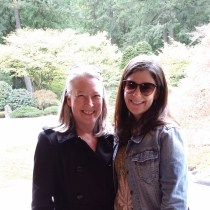
With Emma Clausen (Seattle 2014)

A thank you to all of the students who have gifted me with your conversation, engagement, and perspective over the years. And, who continue to do so once they have graduated and moved into professional positions; thankfully social media and conference travel make it easy to keep in touch. No matter where my career takes me, staying connected with LIS students is a top priority for me!

Coordinator for Information Literacy Services and Instruction (AKA, My Job)

Though most of these blog postings relate more directly to my standing as a candidate for ALA President, as I talk with people at conferences and online, I’m often asked “and, what do you do as a librarian at the university?”

Since 2002, I’ve been the Coordinator for Information Literacy Services and Instruction in  the University Library at the Illinois at Urbana-Champaign. Along the way, I’ve also served concurrently in a number of other positions: the Acting Head of the University High School Library (one year), Head of the Undergraduate Library (three years), Acting Coordinator for Staff Development and Training (one year), and Coordinator for Strategic Planning (one year). The librarians at the University of Illinois at Urbana-Champaign are faculty. I first had the title Associate Professor and a few years ago was promoted to full Professor. I’m also affiliated faculty in the campus Graduate School of Library and Information Science. It has been an amazing place to work with wonderful colleagues and I look forward to the years to come. Previously, I had been the Library Instruction Coordinator at Illinois State University and Reference Librarian at Parkland (Community) College.

Let me also share a bit more about my information literacy work specifically; however, since that has been my focus and passion as a librarian.

I discovered my interest in library instruction/information literacy in library school through a course taught by Mary Jane Petrowski and Beth Woodard. It is a great joy of my professional life that I have worked with both of these amazing librarians on different information literacy projects, publications, etc. since then – they are wonderful mentors!

In my role as Coordinator for Information Literacy Services and Instruction at Illinois, I provide overall leadership for the Library’s instructional programs and our impact on student learning and success. The Office of Information Literacy is quite small – myself, Crystal Sheu (eLearning Specialist), and Anna Lapp (graduate assistant) – but in any given year 100-150 people are teaching in our instruction programs from across our library system and so information literacy is a larger operation than it might appear! I am fortunate to have a strong advisory committee of library faculty and staff, the User Education Committee, which works with me in setting our programmatic direction and monitoring our progress.

Having the information literacy coordinator job in our very decentralized and geographically dispersed research library system means that much of my effort is focused on creating and extending infrastructure. Infrastructure is one of those things we don’t think much about until it isn’t there or is not longer a match to the needs of the organization. Though his work is in a different area (research communications rather than information literacy), I find Cameron Neylon’s writings on infrastructures very informative and thought-provoking as I identify ways in which our instructional infrastructures need to be developed and strengthened.

My focus is on ensuring that our library has reliable and robust instructional infrastructures: the tools, resources, communications, workflows, campus collaborations, information sharing mechanisms, etc. that my colleagues need in order to create information literacy programs for their user communities.

We are guided by a strong Statement on Learning Goals, which was collaboratively created and received the endorsement of our Library’s Executive Committee. We have begun conversations about how the new ACRL Framework for Information Literacy for Higher Education might be best incorporated with our historic use of the ACRL Information Literacy Competency Standards for Higher Education as well as the ideas we had incorporated from the ACRL Model Statement of Objectives for Academic Bibliographic Instruction. We are also working on revising our approach to tracking our instructional work to better document virtual and online instruction as well as enhance our assessment data and analysis.

Providing onsite training and professional development opportunities is also important as well as advocating for resources so that librarians and staff can attend state and national programs. We have many people participate in the annual Illinois Information Literacy Summit each year. (It has been an honor to keynote this conference twice in the past and I’m looking forward to presenting “Can a Constellation Be Critical? The Position(s) of the ACRL Framework and ACRL Standards for Information Literacy” as a breakout session this spring.) A shout-out to the organizers for a high-quality, low-cost local program that is inexpensive for participants and does not charge any fee at all for LIS students to attend! My colleague Beth Woodard and I both teach in the ACRL Immersion Program and we typically have one or more librarians attend at least one of the programs each year. Since that is not an inexpensive program, though it is high-value, this signals that our library administration is very supportive of the information literacy program.

As Coordinator I am also involved with a number of library-wide projects where my role is to bring the lens of teaching and learning to the work at hand. As examples:

  • What are the teaching and learning considerations as we develop our discovery systems?
  • How does the website design impact our instruction programs and what re-design would enable better student learning?
  • How should we be educating our users about the privacy and security of their library records?
  • What are the implications of open licensing our instructional materials?

I also track trends, best practices, and initiatives in information literacy internationally and in the literature and share that information with my colleagues in the Library and on campus. Though I have highlighted my work within the University Library in this summary, I also collaborate with many campus units and professionals. Many of these partners and projects are in the Office of the Provost (e.g., the Center for Innovation in Teaching and Learning and the Grand Challenge Learning Initiative). I am also leading the Library’s work with the Graduate College to implement the Ithaka S+R Graduate/Professional Student Survey and serve as chair of the Faculty Liaison Committee for the Illini Union Bookstore.

This turned out to be longer than I expected and even still I feel like there is so much more I could share because I truly love the work that I do. I hope this has given a sense of me as a librarian but as always I welcome questions and comments. Please – contact me!

P.S. I’ve said it in a number of times but let me repeat here how grateful I am to have the support and encouragement of my library administration in accepting the nomination to be a candidate for the ALA President position.


Midwinter Reflections

A few weeks have passed since the close of the Midwinter Meeting of the American Library Association in Boston (though the related virtual meetings have only completed very recently) and I’ve been reflecting on the conference and the many conversations I had there.

alamw1454796038228Midwinter was an incredible experience for me as a candidate for ALA President. Even though my ALA schedule is usually very busy, I have never been quite so busy or so intensely engaged at every hour. I attended almost 40 meetings of different committees, sections, divisions, interest groups, affiliates, etc. With each group I was able to learn more about ALA members and what their priorities are.

The vision, passion, and energy that I encountered at Midwinter make me confident that ALA has a membership that is ready to bring the association to new levels of engagement and impact. I was also pleased to receive so many comments in support of the priorities I have outlined in my Candidate Statement. To everyone who expressed interest in working on the specific projects I have outlined, be assured I have your contact information in a spreadsheet. If I didn’t meet you are Midwinter and you want to raise your hand to volunteer, please email me so I can add you to the list!

I am grateful to the ALA staff who organized the annual Candidate Forum and to Courtney Young, ALA Past-President, for hosting the event. A recording is available on YouTubeMy opening remarks start at 6:34 and my closing at 54:56.

Between meetings you could find me in the “north entrance” of the convention center, greeting people at my candidate information table. I want to thank the volunteers who staffed the table when I was not able to be there. Thank you so much for your time and enthusiasm – it is great to be part of a community that is so supportive!

I am looking forward to engaging with more members at the Public Library Association Conference and Texas Library Association Conference in April. See you in Denver and Houston!